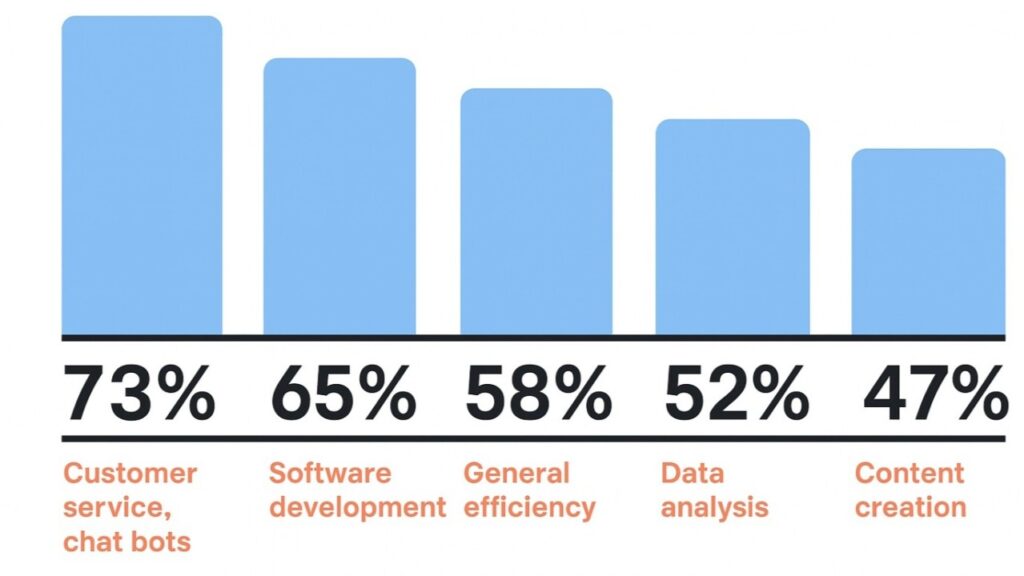
🔹 Core Use Cases (get beyond the chatbot) From customer service chatbots (used by 73% of companies) to automated software engineering and legal document generation, enterprises are seeing real productivity gains. But the message was clear: don’t chase novelty—identify scalable, repeatable use cases aligned to business goals.
🔹 Governance Can’t Be an Afterthought Without a robust governance framework, AI introduces ethical landmines, security gaps, and reputational risk. Suggested approach: create an AI Council across IT, Legal, Risk, and Compliance, and align around policies, data provenance, and model explainability.
🔹 Measure ROI, Not Hype CISOs and CIOs are expected to articulate the business case—yet many are stuck in experimentation mode. The guidance here was to treat generative AI as a strategic investment, not a skunkworks project. Tie it to metrics: time saved, revenue lifted, customer satisfaction improved.
🔹 Start Small, Scale Smart Pilot projects are useful—but only when you’ve pre-defined success criteria. The best-in-class leaders are building centers of excellence to support AI adoption across business units, not just isolated experiments.